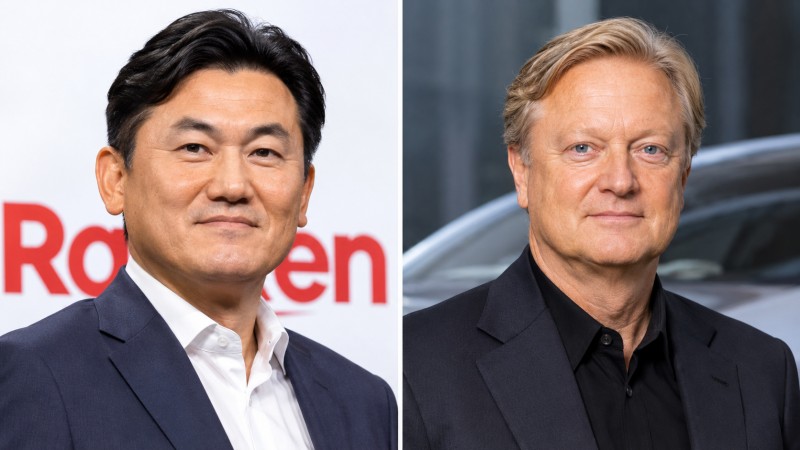
Entrepreneurship takes different forms, especially when business leaders work in completely different industries. Hiroshi Mikitani and Henrik Fisker are two internationally recognized entrepreneurs whose careers offer an interesting comparison. One built a technology and e-commerce business in Japan, while the other pursued ambitious ideas in automotive design and electric vehicles.
Hiroshi Mikitani and Henrik Fisker are entrepreneurs known for working in different industries. Mikitani founded Rakuten, a Japanese technology and e-commerce group, while Fisker became recognized for automotive design and electric vehicle ventures. No verified public evidence establishes a direct business partnership or family relationship between them.
But is there an actual connection between Hiroshi Mikitani and Henrik Fisker?
Based on the publicly available information reviewed for this article, there is no verified evidence establishing a direct business partnership, shared company, major investment relationship, or family connection between them. Their stories are better understood through their individual careers, business decisions, and approaches to innovation.
Who Is Hiroshi Mikitani?
Hiroshi Mikitani is a Japanese entrepreneur best known as the founder and longtime leader of Rakuten Group. His career demonstrates how an online business can develop into a diversified technology organization with operations across multiple industries.
Born in Kobe, Japan, Mikitani pursued higher education at Hitotsubashi University before beginning his professional career in banking. He later earned an MBA from Harvard Business School.
Rather than following a traditional corporate career indefinitely, he decided to establish his own business.
Founding Rakuten
Mikitani established the company that became Rakuten in February 1997. Its original business concept focused on creating an online shopping marketplace where independent merchants could reach customers through the internet.
The idea helped create new opportunities for retailers looking to participate in Japan’s growing digital economy.
Over time, Rakuten expanded beyond e-commerce. Its business activities came to include:
-
Online shopping and marketplace services.
-
Financial technology and banking.
-
Credit card services.
-
Digital content and entertainment.
-
Telecommunications and mobile services.
-
International technology investments.
This expansion created what Rakuten describes as its ecosystem, connecting different services and customer experiences.
Hiroshi Mikitani’s Leadership Approach
One important feature of Mikitani’s business strategy has been diversification.
Instead of depending on one source of revenue, Rakuten developed businesses across several connected industries. This approach allows different services to support the broader organization.
His career also demonstrates the importance of understanding local markets while pursuing international opportunities.
Rakuten’s development is particularly relevant to entrepreneurs interested in digital marketplaces, customer relationships, and long-term business expansion.
Who Is Henrik Fisker?
Henrik Fisker is a Danish automotive designer and entrepreneur recognized for his work on luxury vehicles and electric cars.
Unlike Mikitani, whose career developed around digital platforms, Fisker’s professional background is rooted in automotive engineering, vehicle design, and product development.
He studied automotive design at the ArtCenter College of Design and began his professional career in Germany.
His work with major automotive manufacturers helped establish his reputation in the luxury vehicle industry.
His Work With BMW and Aston Martin
Fisker’s professional experience includes important positions at BMW, Ford, and Aston Martin.
Some of the vehicles associated with his design career include:
-
BMW Z8: A luxury sports car associated with Fisker’s design work.
-
Aston Martin DB9: A prominent grand touring model.
-
Aston Martin V8 Vantage: Another notable vehicle from his design career.
-
Fisker Karma: A luxury plug-in hybrid vehicle developed through his first automotive company.
These projects demonstrate his interest in combining distinctive styling with automotive technology.
His career is an example of how creative design can influence a company’s identity and the way customers perceive its products.
Establishing Fisker Automotive
In 2007, Henrik Fisker co-founded Fisker Automotive.
The company aimed to introduce premium vehicles with electrified powertrains. Its best-known early product was the Fisker Karma, which entered production in 2011.
However, the company experienced financial and production difficulties.
Fisker Automotive filed for Chapter 11 bankruptcy protection in 2013 after facing serious business challenges.
This experience became an important part of Fisker’s entrepreneurial history. It also demonstrated that developing an innovative vehicle is only one part of building a sustainable automotive company.
The Launch of Fisker Inc.
Henrik Fisker returned to the automotive business with the launch of Fisker Inc. in 2016.
He co-founded the company with Dr. Geeta Gupta-Fisker. The business focused on developing electric vehicles with an emphasis on design, technology, and sustainability.
Its most recognizable product was the Fisker Ocean, an all-electric SUV.
The company attempted to use an asset-light business model, relying on manufacturing partners rather than building a completely independent production infrastructure.
However, the strategy did not prevent major financial and operational difficulties.
In June 2024, Fisker Inc. filed for Chapter 11 bankruptcy protection in the United States. The court subsequently confirmed its liquidation plan in October 2024, which became effective on October 17, 2024.
It is important to distinguish Fisker Inc. from Henrik Fisker himself. The company’s liquidation does not mean that the designer’s entire professional career ended.
Are Hiroshi Mikitani and Henrik Fisker Connected?
This is the central question behind the keyword.
Based on the official company biographies, corporate information, regulatory documents, and other public records reviewed, no verified direct business relationship between Hiroshi Mikitani and Henrik Fisker has been established.
There is no confirmed evidence in the reviewed sources showing that they:
-
Founded a company together.
-
Established a joint business venture.
-
Publicly announced a major investment in each other’s businesses.
-
Shared a documented corporate leadership position.
-
Have a publicly established family relationship.
Their professional backgrounds also point toward different business environments.
Mikitani’s career is primarily associated with Rakuten and its technology ecosystem. Fisker’s career centers on automotive design and electric vehicle companies.
Therefore, it would be misleading to describe them as business partners or claim that one directly supported the other’s ventures without additional evidence.
Why Are Their Names Searched Together?
There are several reasonable explanations for the interest in these two entrepreneurs.
1. Both are internationally recognized founders
Mikitani and Fisker built businesses around ambitious ideas. Their careers attract attention from readers interested in entrepreneurship and innovation.
2. Both challenged established industries
Mikitani developed an online marketplace when traditional retail was still dominant. Fisker pursued new approaches to premium vehicle design and electric mobility.
3. Their business experiences offer different lessons
Rakuten developed into a diversified technology group, while Fisker’s automotive ventures experienced significant financial and operational difficulties.
Comparing their experiences provides an opportunity to understand different approaches to business development.
These are explanations for why the names may be interesting together, not verified reasons for an individual’s particular search.
Hiroshi Mikitani vs. Henrik Fisker: Key Differences
Although both individuals are entrepreneurs, their professional backgrounds and business models are considerably different.
| Comparison | Hiroshi Mikitani | Henrik Fisker |
|---|---|---|
| Nationality | Japanese | Danish |
| Profession | Entrepreneur and business executive | Automotive designer and entrepreneur |
| Main industry | Technology and e-commerce | Automotive and electric vehicles |
| Best known for | Founding Rakuten | Luxury automotive design and Fisker companies |
| Major company | Rakuten Group | Fisker Automotive and Fisker Inc. |
| Education | Hitotsubashi University and Harvard Business School | ArtCenter College of Design |
| Business focus | Digital platforms and services | Vehicle design and development |
| Notable association | Rakuten ecosystem | BMW Z8, Aston Martin DB9 and Fisker Ocean |
The comparison highlights two different approaches to innovation.
Mikitani concentrated on building a connected network of services, while Fisker concentrated on designing and commercializing physical products.
Comparing Their Entrepreneurial Strategies
Their careers also provide an interesting perspective on how businesses grow and manage risk.
1. Building an Ecosystem vs. Creating Products
Mikitani’s strategy involved developing multiple services that could operate within a larger business ecosystem.
For example, e-commerce, financial services, and telecommunications can serve different customer needs while strengthening the wider Rakuten brand.
Fisker’s approach was more product-focused.
His companies aimed to introduce distinctive vehicles that combined design with new automotive technology.
Both approaches require innovation, but their operational demands are different.
2. Managing Financial and Operational Risks
Rakuten’s business model involves managing several business segments, technology investments, and international operations.
Automotive manufacturing presents a different set of challenges.
A car company must manage product development, engineering, production, suppliers, regulatory requirements, distribution, and customer support.
The financial difficulties experienced by Fisker’s companies illustrate how complicated this process can become.
Reuters reported that Fisker Inc. faced cash constraints, production difficulties, and challenges in the competitive electric vehicle market before its 2024 bankruptcy filing.
3. Long-Term Business Development
Rakuten’s development shows the importance of gradually expanding a business beyond its original offering.
Fisker’s experiences highlight the difficulties of converting an ambitious product vision into a commercially sustainable operation.
Neither example proves that one business strategy is universally better.
Instead, they demonstrate that success depends on industry conditions, financial resources, operational execution, and the ability to adapt.
What Happened to Henrik Fisker’s Companies?
Understanding Henrik Fisker’s business history requires distinguishing between his two major automotive ventures.
| Business | Background | Outcome |
|---|---|---|
| Fisker Automotive | Founded in 2007 | Filed for Chapter 11 bankruptcy in 2013 |
| Fisker Inc. | Co-founded in 2016 | Filed for Chapter 11 in June 2024 and entered liquidation in October 2024 |
The second company’s bankruptcy attracted considerable attention because of its Fisker Ocean electric SUV.
The company had ambitious plans for electric mobility, but its commercial operations faced difficulties.
According to Reuters, the business struggled with cash consumption, production challenges, and an increasingly competitive electric vehicle market.
The court-approved liquidation plan became effective on October 17, 2024.
This distinction is particularly important for readers researching Fisker in 2026. Fisker Inc.’s previous corporate operations should not be presented as though the company remains an operating electric vehicle manufacturer.
What Entrepreneurs Can Learn From Their Careers
The careers of Hiroshi Mikitani and Henrik Fisker offer several useful business lessons.
Build around a clear customer need.
Rakuten’s original marketplace model addressed the needs of merchants seeking access to online customers. Strong business ideas begin with understanding a real market problem.
Innovation needs operational support.
A creative product concept cannot guarantee commercial success. Businesses also need reliable production, financial planning, and customer support.
Diversification requires careful management.
Expanding into multiple industries can create opportunities, but it also increases organizational complexity.
Financial planning matters.
Long-term business development requires sufficient capital and realistic expectations about expenses, revenue, and market demand.
Adaptability is essential.
Markets change, customer expectations evolve, and new competitors emerge. Entrepreneurs must be prepared to adjust their strategies.
These lessons come from comparing their documented business histories. They should not be interpreted as personal advice or as proof that either entrepreneur followed every principle perfectly.
Final Thoughts on Hiroshi Mikitani and Henrik Fisker
Hiroshi Mikitani and Henrik Fisker represent two different approaches to entrepreneurship.
Mikitani built Rakuten into a diversified technology organization, while Fisker established a reputation through automotive design and ambitious electric vehicle ventures.
Their professional journeys demonstrate that innovation can take many forms. It can involve creating a digital marketplace, expanding connected services, or developing a new generation of vehicles.
However, the available public evidence does not establish a direct business or family relationship between them.
For readers researching Hiroshi Mikitani and Henrik Fisker, the most useful perspective is to understand their individual achievements, business decisions, and different experiences with innovation rather than assume an undocumented connection. See more
Frequently Asked Questions
Are Hiroshi Mikitani and Henrik Fisker business partners?
No verified public documentation reviewed for this article establishes a business partnership between Hiroshi Mikitani and Henrik Fisker. Their professional careers are associated with separate companies and industries.
Are Hiroshi Mikitani and Henrik Fisker related?
No reliable public evidence reviewed establishes a family relationship between the two entrepreneurs. They have different national and professional backgrounds.
Who is Hiroshi Mikitani?
Hiroshi Mikitani is a Japanese entrepreneur who founded Rakuten in 1997. He is known for developing the company into a diversified organization operating across e-commerce, financial services, telecommunications, and digital services.
What is Henrik Fisker famous for?
Henrik Fisker is a Danish automotive designer and entrepreneur. He is associated with the BMW Z8, Aston Martin DB9, Aston Martin V8 Vantage, Fisker Karma, and Fisker Ocean.
Did Hiroshi Mikitani invest in Fisker Inc.?
No verified investment by Hiroshi Mikitani in Fisker Inc. was identified in the public sources reviewed. An investment relationship should not be claimed without reliable corporate or financial documentation.
What happened to Fisker Inc.?
Fisker Inc. filed for Chapter 11 bankruptcy protection in June 2024. Its liquidation plan was confirmed by the bankruptcy court in October 2024 and became effective on October 17, 2024.
Is Henrik Fisker still an automotive designer?
Henrik Fisker’s professional identity is associated with automotive design and entrepreneurship. His company’s liquidation should not be confused with the end of his individual professional career.
What is the difference between Hiroshi Mikitani and Henrik Fisker?
Mikitani is primarily known for building a technology and e-commerce ecosystem through Rakuten. Fisker is known for luxury vehicle design and electric vehicle entrepreneurship. Their industries, business models, and commercial experiences are different.
Which companies are associated with Hiroshi Mikitani?
Hiroshi Mikitani is primarily associated with Rakuten Group and its related businesses, including Rakuten Mobile and Rakuten Symphony.
What business lessons can be learned from their careers?
Their careers illustrate the importance of customer needs, financial planning, operational execution, innovation, and adaptability. They also show that different industries require different approaches to building sustainable businesses.